
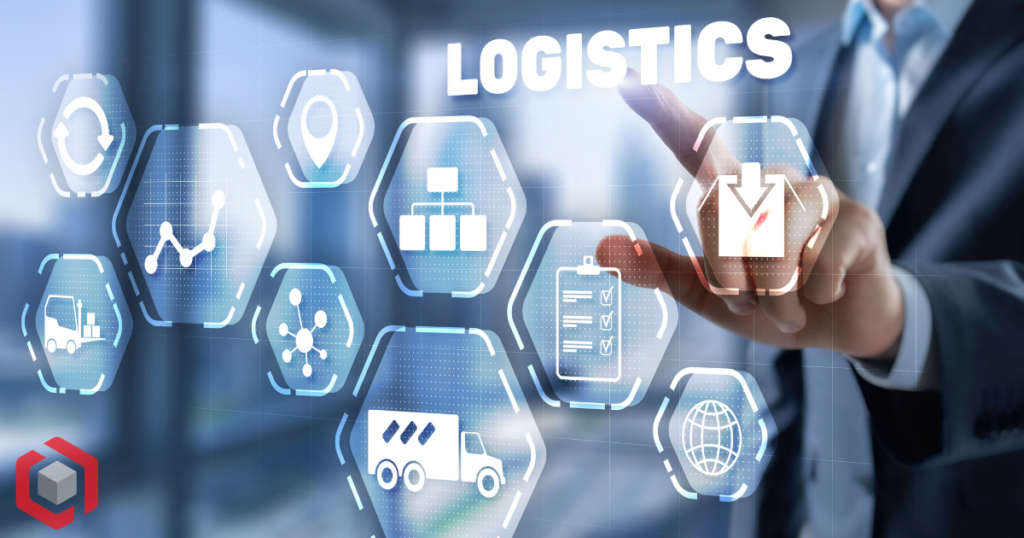
Over the past months, more and more industries have begun to experience the impact of artificial intelligence. After software development, legal services and finance, freight forwarding and logistics are now firmly in focus.
The question is no longer whether change is coming.
The real question is: how deep and how fast will the structural transformation be?
What Does “Creative Destruction” Mean in Logistics?
The concept of creative destruction describes how innovation simultaneously creates new value while dismantling outdated business models.
Railways transformed transportation.
The internet reshaped media.
Email replaced fax.
Artificial intelligence may now represent a similar turning point in freight forwarding — only at a much faster pace.
AI is not just another tool. It is becoming an infrastructure-level technology capable of:
Automating quotation processes
Optimizing routes and capacity utilization
Predicting delays and risks
Enabling dynamic pricing
Replacing administrative workflows
Supporting data-driven decision-making
This is particularly disruptive for data- and optimization-intensive industries such as international road freight and freight forwarding.
Why Is the Market Reacting So Strongly?
Global investment in AI is reaching historic levels. Investors are pricing in:
Significant productivity gains
Lower service costs
Increasing price competition
Shrinking margins
AI is fundamentally a deflationary technology — the same service can be delivered faster, more efficiently and at lower cost.
Traditional information-based brokerage models are therefore vulnerable.
Where value is derived primarily from manual coordination and information asymmetry, competitive pressure will intensify.
Which Areas of Freight Forwarding Are Most Affected?
AI primarily impacts tasks that are:
Standardizable
Repetitive
Data-driven
Rule-based
Examples include:
Quotation preparation
Tender evaluation
Rate calculation
Capacity sourcing
Documentation
Reporting
If a company’s value proposition is limited to coordinating emails and forwarding information, the pressure will be significant.
What Is Not Easily Automated?
Complex, trust-based logistics operations represent a different category.
This includes:
Pharmaceutical and temperature-controlled transport
Oversized and project cargo
High-risk or customized freight solutions
Regulated and audited supply chains
Reputation-sensitive decision-making
Long-term partner management
AI can support these processes.
But it does not assume legal responsibility.
It does not manage crisis situations at 2:30 a.m.
It does not build trust.
Technology tends to threaten mediocrity — not professional depth.
Bubble or Structural Shift?
Historically, major technological waves have been accompanied by volatility and overinvestment in their early stages.
Short-term market fluctuations are likely.
But long-term structural change appears inevitable.
The strategic question is not whether AI will replace jobs in logistics.
It is this:
Where will your company position itself in the value chain within the next three to five years?
Three Strategic Positions Emerging in Freight Forwarding
Highly automated, price-driven mid-market operators
AI-enabled, efficiency-focused but differentiated players
High value-added, complex solution providers in premium segments
The first category faces the highest risk.
The second and third may benefit from the transition.
AI does not only disrupt.
It amplifies differences.
Well-structured, specialized and transparent operators may strengthen their competitive position. Those relying purely on volume to compensate for shrinking margins may face increasing pressure.
What Does This Mean in Practice?
The real strategic questions are:
Where can AI increase our efficiency?
Where can it protect our margins?
And where must we consciously position ourselves in areas where value goes beyond data optimization?
The next 3–5 years in freight forwarding will not be about extinction.
They will be about reconfiguration.
The INCON-LOGISTIC Ltd. Perspective
For us, AI is not a threat. It is an operational tool.
In standardized processes, it improves efficiency.
In complex decisions, professional accountability and experience remain essential.
INCON-LOGISTIC Ltd. does not build its strategy on volume.
We focus on structured, specialized operations.
In pharmaceutical logistics, specialized transport and complex supply chains, risk management, auditability and partnership cannot be fully automated.
Technology is accelerating.
The value of strategic thinking is not declining.
That is where we see the difference.